Yes, a manager can use AI to help write a review, but not to make the call. Let the tool draft, tidy and rehearse from notes you supply. Keep the rating, the pay decision, the warning and any dismissal with a named person who can give the reasons without the tool open. Tell the employee when AI helped, and keep their name and details out of public tools. The rule below, which I call the Pen and Verdict Rule, shows where each task belongs.
Is this already happening in your business?
Probably, and the most recent survey I found points the same way. The Predictive Index surveyed 399 managers and 208 CEOs and business leaders across various industries, and HR Dive reported the results on 21 August 2026. The coverage does not say which country the respondents were in. Of the managers, 44% said they had entered employee names and performance details into public AI tools, and 72% said public AI tools are useful for preparing hard conversations. Only 45% of organizations had a formal written policy on AI use in performance management (HR Dive, 21 August 2026).
That is one survey, and I could not see its fieldwork dates or method, so treat it as a signal rather than a measure of your business. The signal is still clear: managers are using these tools on people questions, and in many firms nobody has told them where the line is. My reading is that the gap between "a manager is allowed to use AI" and "a manager knows what AI is allowed to do here" is where the risk sits.
What is the Pen and Verdict Rule?
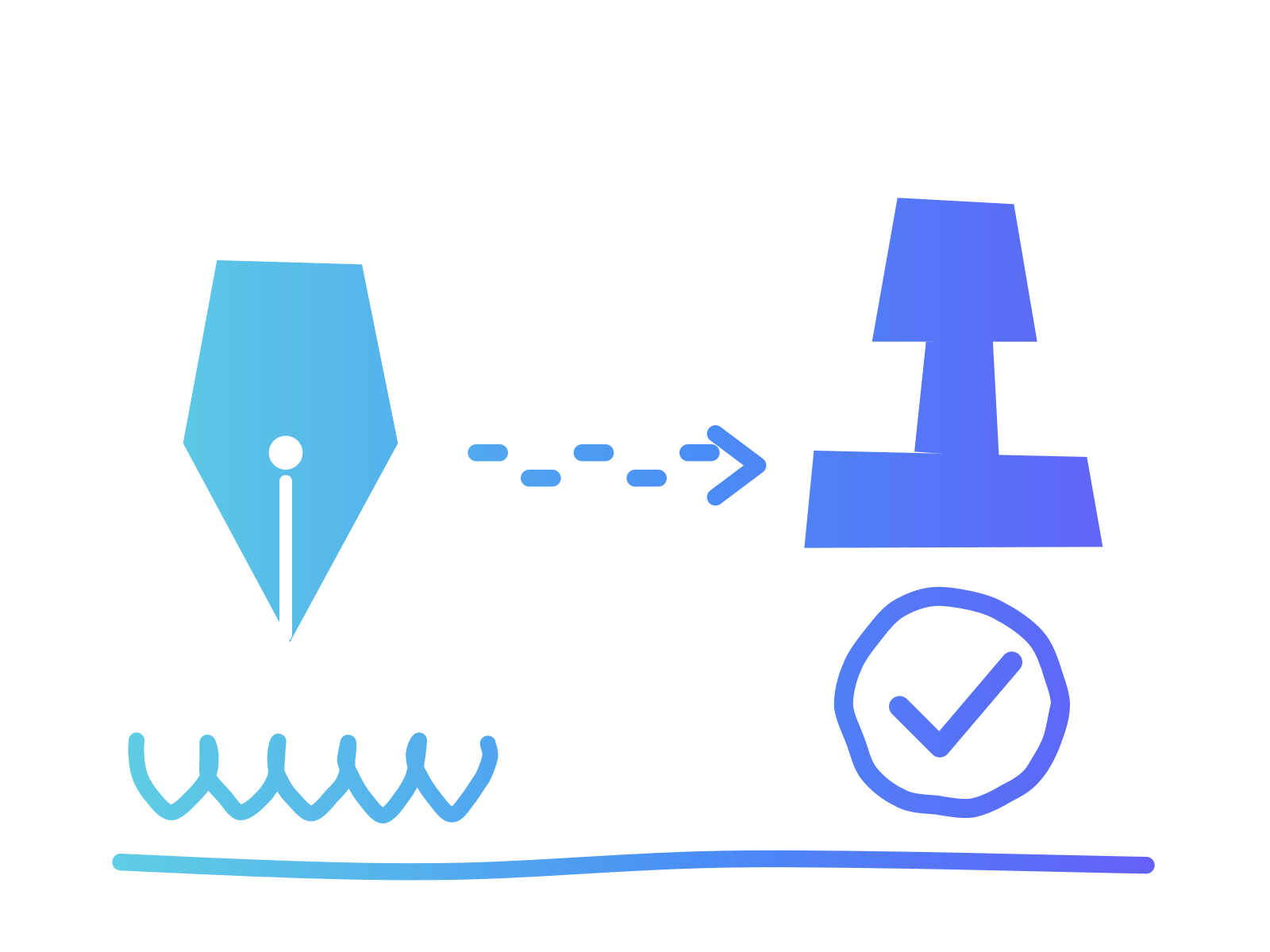
The Pen and Verdict Rule is my suggested way to split AI's role in people decisions: AI may hold the pen, helping a manager draft, rehearse and structure what they already know, but a named person owns the verdict, meaning the rating, the pay, the promotion, the warning or the dismissal, and must be able to explain the reason in their own words without the tool. It is my own method, not a legal standard or established research.
| Lane | AI's role | What AI may do | What stays with the manager |
|---|---|---|---|
| Pen | Allowed | Turn the manager's own notes into clear sentences, tighten the tone, flag vague or loaded wording | The notes, the facts, the examples |
| Prep | Allowed with care | Suggest questions, rehearse a hard conversation, point out gaps in the evidence | Deciding what matters and what to say |
| Verdict | Person only | A second opinion the manager is free to ignore | Rating, pay, promotion, warning, performance plan, dismissal |
The test that keeps the rule honest is a check the manager runs before any verdict is shared. Can I give the reasons without the tool open? Does the employee know AI helped with the paperwork? Can they ask a person to look at any part again? If any answer is no, the verdict is not ready.
This is the governing principle I use across my work, applied to one job: outsource the doing, not the thinking. Drafting is doing. Deciding is thinking.
Why does the verdict have to stay with a person?
Because both UK and US rules are drifting toward the same line, and because a decision nobody can explain is hard to defend in either country. I read the sources below this week, and the wording matters.
In the UK, the Information Commissioner's Office (ICO) says data protection law restricts solely automated decision-making and profiling that has legal or similarly significant effects. Its examples are about hiring: shortlisting, interviewing, rejecting or promoting a candidate. The same page says you must build meaningful human involvement into each stage, that a human must be able to disagree with the AI output and overturn it, and that if a human cannot overturn it, the decision counts as solely automated even if a person reviewed it. The page is guidance for recruitment, and it says it is under review after the Data (Use and Access) Act came into law on 19 June 2025 (ICO, automated decision-making and profiling for recruitment and selection). Applying that logic to ratings, pay and warnings is my interpretation, not the ICO's statement. It is the sensible reading for a business that wants a safe default.
Acas, the UK's workplace advice service, issued a draft Code of Practice on disciplinary and grievance procedures on 30 July 2026. The consultation closed on 23 September 2026 and Acas is reviewing responses. In the consultation, Acas says stakeholders have raised questions about the increasing use of AI in disciplinary and grievance processes, and asks whether the Code or guidance should address it. The draft says fact-finding should be "objective, reasonable, proportionate" (Acas consultation page). The page I read does not set out an AI rule, so nothing is settled. My interpretation: if a manager cannot say how they reached a warning, they will struggle to show the process was any of those three things.
In the US, there is no single federal rule for this, but Illinois shows the direction. An amendment to the Illinois Human Rights Act took effect on 1 January 2026. A law firm's alert from August 2024 says it makes it unlawful for employers to use AI in covered employment practices, which include promotion, discharge, discipline and tenure, if the AI has the effect of subjecting employees to discrimination based on protected classes, and that it requires employers to give employees notice when AI is used in those practices. The alert says the state's Department of Human Rights may set the timing and method of notice by rule, and I did not verify the current status of those rules (Burke Warren alert, 19 August 2024). If you employ people in Illinois, check the current position with an employment lawyer. Other states differ.
What does a bad version look like?
It looks like speed. Take a hypothetical 30-person logistics firm. A depot manager has a driver with a lateness record and two customer complaints. On his phone, on a free personal chatbot account, he pastes the driver's name, the lateness log and his rough notes, and asks for a first written warning. The result reads well. It describes a "pattern of unreliability" the notes never actually said. He sends it that afternoon.
Four things went wrong, and none of them was the typing. Personal data went into a tool the business has no agreement with, which is the same gap I covered in what to do if an employee pastes customer data into ChatGPT. The wording went beyond the facts and nobody checked it. The driver was not told AI helped draft it. And the driver had no obvious route to ask a person to look again. Run the same case through the Pen and Verdict Rule and the manager uses an approved tool, supplies facts only, writes the verdict himself, adds a disclosure line and names who can review it.
What I Tell Business Owners
Across the business teams I train, managers rarely ask whether AI is allowed to write a review. They ask whether they will get into trouble if they use it. That is the second question. The first is whether a human is actually deciding.
I use the Loop Test for this: "Oversight that survives all three is a safeguard. Oversight that fails any of them is a signature." A manager who pastes a draft into the form and presses send has not checked it, because they would not notice a wrong sentence unless something told them to look. Their name on the page is a signature. The Pen and Verdict Rule is a way of making sure the name means something.
The owner's job is not to ban the tool. A ban moves the practice onto personal phones, which is the shadow AI problem in its most sensitive form. The job is to say, in one page, what the tool is for.
But isn't AI fairer than a tired manager?
Sometimes it may be more consistent in wording, and that is a fair use of the pen. I have not seen a source this week that shows AI makes fairer ratings, and the Illinois law exists because of the opposite worry: that AI can have a discriminatory effect. A tool can polish a biased judgment as easily as a fair one, and polished is harder to challenge. Use AI to check your wording for loaded phrases. Do not use it to tell you what you think of a person.
What goes in the one-page rule?
Keep it short enough that a manager reads it in a minute. Here is a version you can copy and adjust. Take out anything that does not fit how you work.
AI and people decisions: the Pen and Verdict Rule
- Managers may use approved AI tools to draft, tidy and rehearse reviews, feedback and meeting notes from facts they supply.
- Names and personal details go only into tools the business has approved in writing.
- A named person decides every rating, pay change, promotion, warning, performance plan and dismissal. The tool does not.
- Before sharing a verdict, the manager can explain the reasons without the tool.
- Employees are told when AI helped prepare their paperwork: "Parts of this were drafted with an AI tool from my own notes. I wrote the rating and the reasons, and I stand behind them. You can ask me or [named person] to look at any part again."
If you want to see how it sits alongside the rest of your rules, does a small business need an AI policy? makes the case for writing one, the UK small business AI policy template gives you a starting point, and AI disclosure for small business covers when and how to tell people. If you are using AI earlier in the employment cycle, AI to screen job applicants covers hiring.
What should you do this week?
- Today: ask your managers, without blame, whether any of them has used AI on a review, feedback or a warning, and which account they used. You want the true picture, not the tidy one.
- Tomorrow: decide which approved tool, if any, managers may use for people paperwork, and tell them in writing.
- This week: adapt the one-page rule above and send it to every manager with the disclosure line.
- Before your next review round: name the person employees can ask to look at any part again.
- Within the month: run a short session where managers practice the three-question check on a made-up case. Training staff to check AI output shows how to build the habit, and how to manage a team that uses AI covers the wider management job.
Where to go next
If your managers are using AI but nobody has shown them where it fits in people decisions, that is what my AI training for teams is built for. If you would rather see where your business stands first, take the free Business AI Readiness Check. And if you are planning an event and want your members or leaders to hear this argument in person, I give keynotes to business audiences.
Sources and further reading
- The Predictive Index survey, as reported by HR Dive: HR Dive report on the survey, 21 August 2026. 399 managers and 208 CEOs and business leaders across various industries; country and fieldwork dates not stated in the coverage.
- Information Commissioner's Office, Automated decision-making and profiling for recruitment and selection, read 11 November 2026. Recruitment guidance, under review after the Data (Use and Access) Act, which became law on 19 June 2025.
- Acas, Consultation: draft Code of Practice on disciplinary and grievance procedures, issued 30 July 2026, closed 23 September 2026, read 11 November 2026.
- Burke Warren, Illinois Human Rights Act amended to address use of artificial intelligence in employment practices, 19 August 2024 (a law firm summary of the amendment effective 1 January 2026; not the statute itself).
- On this site: Shadow AI in a small business, What to do if an employee pastes customer data into ChatGPT, Does a small business need an AI policy?, UK small business AI policy template, AI disclosure for small business, AI to screen job applicants, Train staff to check AI output, How to manage a team that uses AI.
Dan Fitzpatrick is The AI Educator, a Forbes contributor, keynote speaker and bestselling author who has trained more than 150,000 people across 30+ countries.